

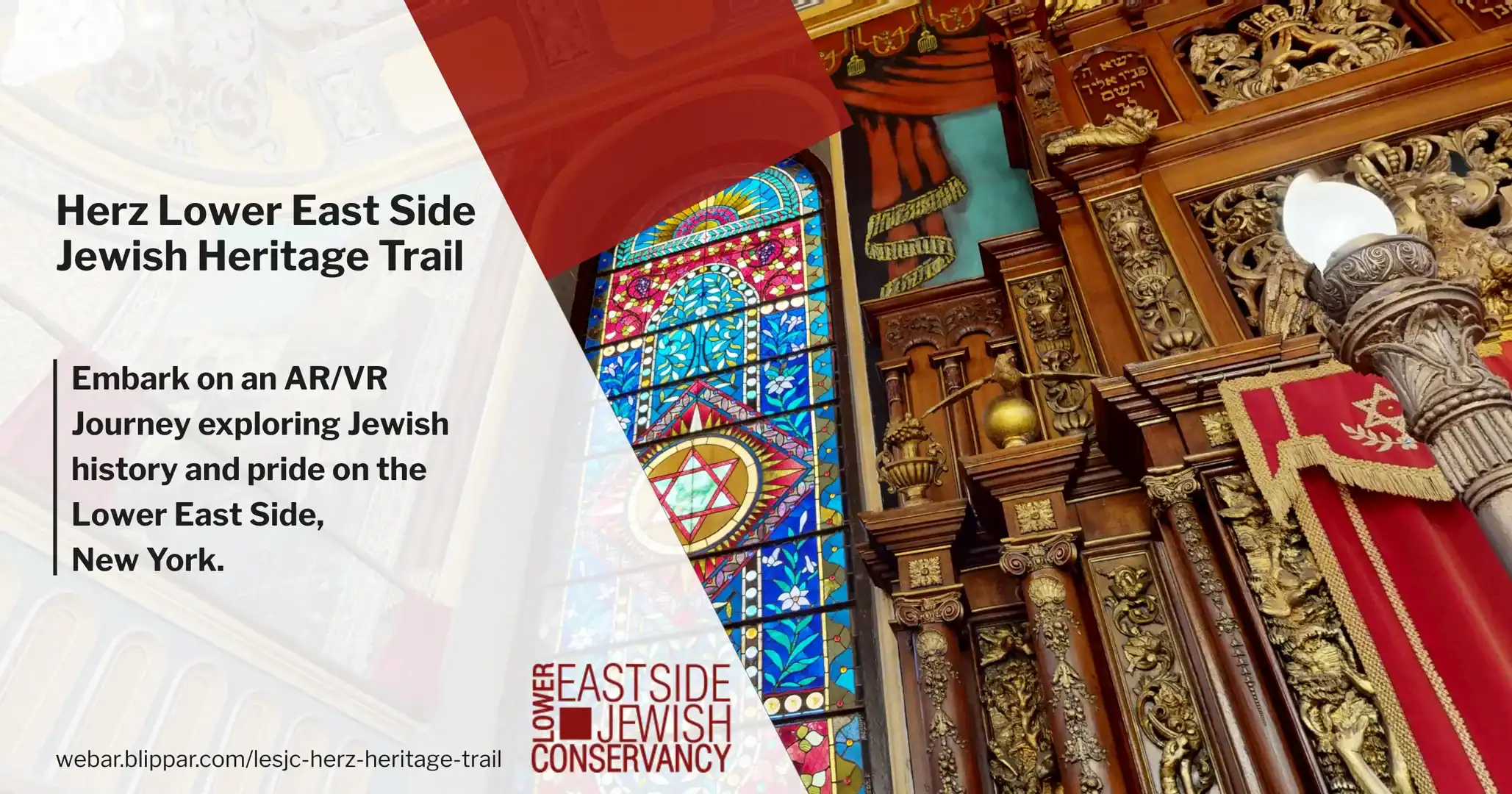
From a solution design perspective. By Wagner Evora And Moe Miah
The project began with a dedication to New York City activist and advocate Roger Herz, endowed by his sister, Carol Joan Herz Brull, and carried forward through the leadership of Jason Guberman and the Lower East Side Jewish Conservancy.
It then took shape around a curated list of sites, organised into four walking tours and inspired by Joyce Mendelsohn’s classic book, The Lower East Side Remembered and Revisited: A History and Guide to a Legendary New York Neighborhood. Mendelsohn’s book documents the rich Jewish heritage of New York’s Lower East Side – a neighbourhood shaped by generations of migration, culture, community, and change.
Like all major cities, New York is constantly evolving. Streets transform, buildings disappear, and neighbourhoods are redefined over time. Where a school once stood, apartment blocks now rise. Where children once played, there may now be a retail car park.
The Lower East Side is no exception.
Against this backdrop of continual change, the The Lower East Side Jewish Conservancy set out to preserve and share the stories, landmarks, and memories of the Jewish heritage that once defined – and in many ways still defines – the neighbourhood today.
Our approach – designing the framework as the project evolved
At Blippar our background is part immersive technologies, part emerging technologies, and the in house knowledge we have built over years, and multiple hundreds of campaigns working with the world’s leading brands to bring their AR, VR, AI, XR and data lead activations to life.
A great heritage story is what brands want to create.
With a heritage story such as this it has deep rooted history, also lives in the now and will evolve and grow in time.
Being a Heritage project that had so many sites even with an army of researchers it would take years to gather all the potential stories that could be told, so we knew the content would be incomplete and evolving. The launch scope may evolve, and it would not be clear which sites would go live first.
The team were tasked to create a flexible framework that is adaptable to what comes in – designing in parallel to evolving research.
Rather than waiting for every asset and requirement to be defined upfront, the team had to prototype a solution that could grow with the project itself.
That challenge shaped the entire development approach. Instead of creating a fixed experience based on known content, the team built an expandable structure that could accommodate change over time. The platform was designed to support different volumes of content as they emerged, and to handle a range of formats discovered throughout the research process, from Matterport tours to still images. New 3D display capabilities were also introduced to support the way the experience needed to evolve.
This flexibility was especially important because the project was not just large in scale, but uneven in what was available from site to site. Some locations had richer source material, while others had little to work with. That meant the team was solving not only a technical problem, but also an experience design problem: how to build something coherent and engaging when the content foundation varied so widely. One response was to create approaches for sites that lacked existing material, including the use of outdoor shooting to help fill content gaps where needed.
A particularly interesting part of the work was the use of AI to help recreate places that no longer exist in their original form. For demolished or missing buildings, the team used historical images as source material to generate initial recreations. These AI-generated outputs were not treated as final assets, but as starting points. From there, the artist team refined and optimised them into models and visuals suitable for the experience.
One example discussed was a “memory overlap” image created from three or four images. This was used for a demolished site, allowing visitors to view the current vacant location while also seeing the historic structure in situ. It created a way to connect past and present in the same experience, giving users a stronger sense of place and historical context.
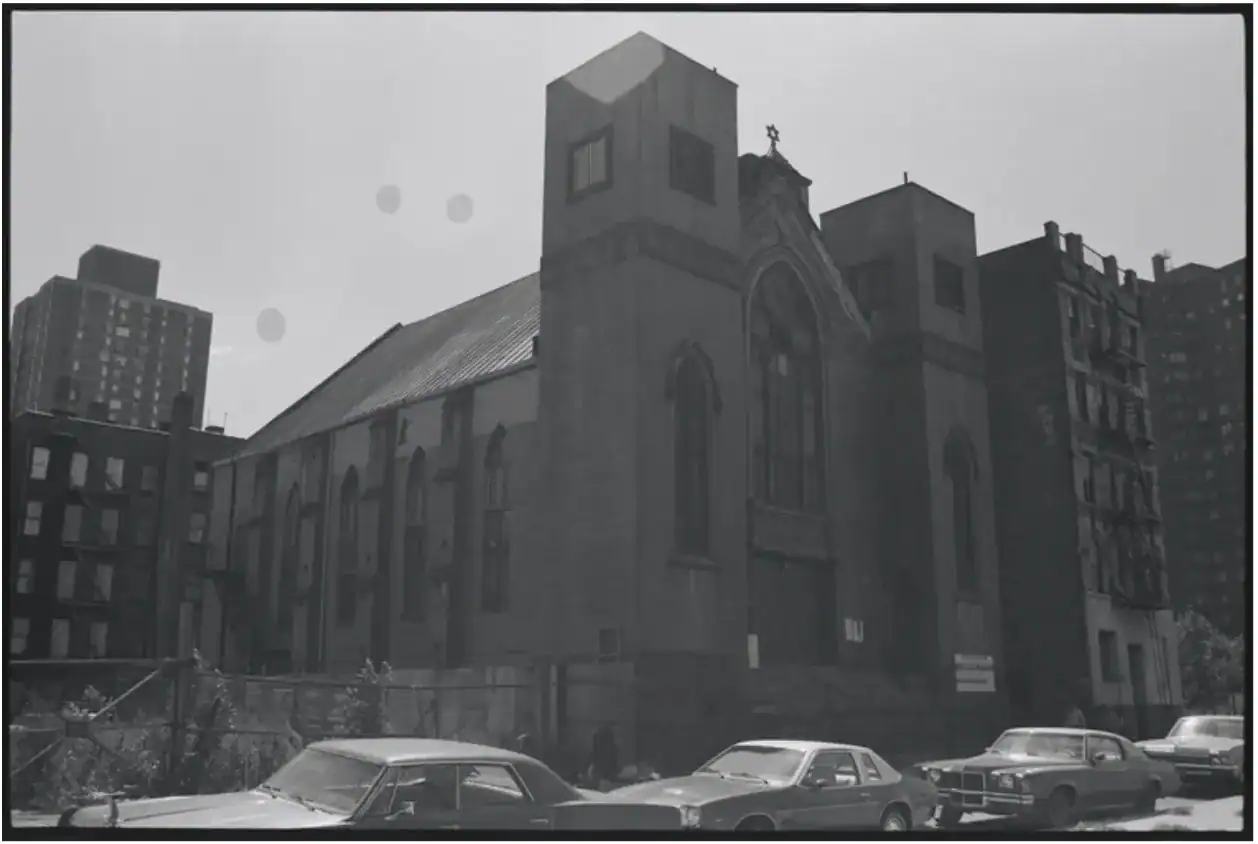
Demolished site: First Roumanian American Congregation
Video capture of the feature: ‘Memory overlap’ – First Roumanian American Congregation
From archival images to 3D reconstruction
Another example was the use of AI to create a first-draft 3D recreation of a site from archival images, informed by research into the building’s blueprint and limited reference images. This provided a starting point for visualising the site as it may have appeared in its glory days. But the human eye remained essential: because AI-generated geometry and mesh are good tools to for proof-of-concept but not yet accurate enough, and the file sizes were too large and unoptimised for WebAR/VR delivery, the asset then had to be rebuilt and refined in Blender by the artist team.
Blippar brings deep technical expertise shaped by years of solving complex challenges across immersive technology, systems, and digital experiences. But beyond the technology, the team also understands how to interpret client needs, design around user behaviour, and communicate ideas in ways that feel clear, meaningful, and human.
This broader perspective became fundamental to the project itself: recognising that places are not defined solely by infrastructure or geography, but by the people, memories, histories, and communities connected to them.
Thus the project also recognised that heritage is not held in one place. Memories, photographs, documents, and personal stories often live within the community itself – across families, former residents, visitors, archives, and local organisations. As the work developed, this became an important opportunity: the experience did not have to remain limited to the content available at launch. It could become a living platform, able to grow as new material, voices, and perspectives come forward.
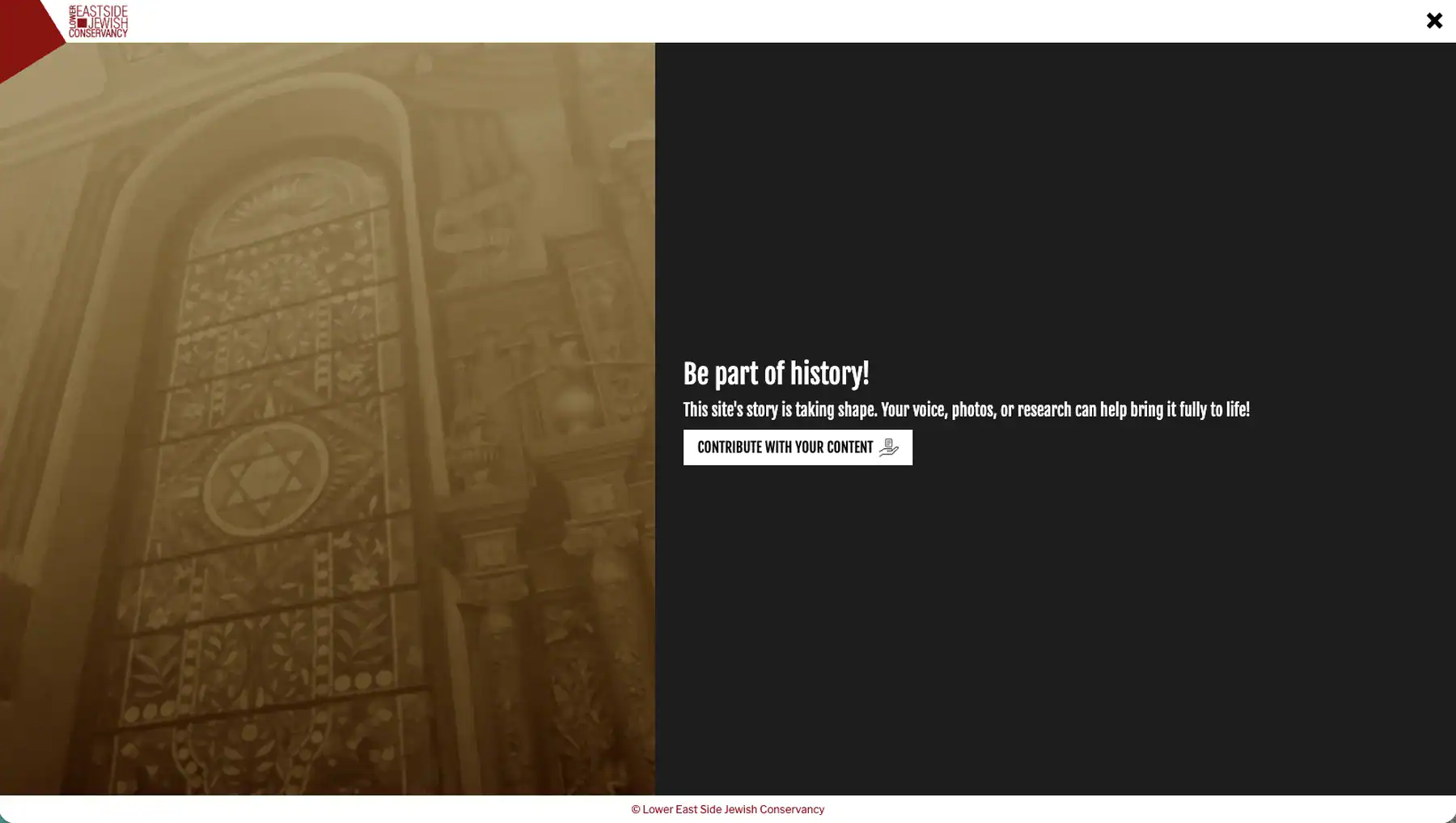
Calls to action within the tour create a pathway for that growth, inviting people to contribute additional stories, images, memories, corrections, or historical material over time. This makes the experience participative as well as immersive. The trail can expand beyond the initial research phase, allowing the community to help shape the archive and keep the history alive.
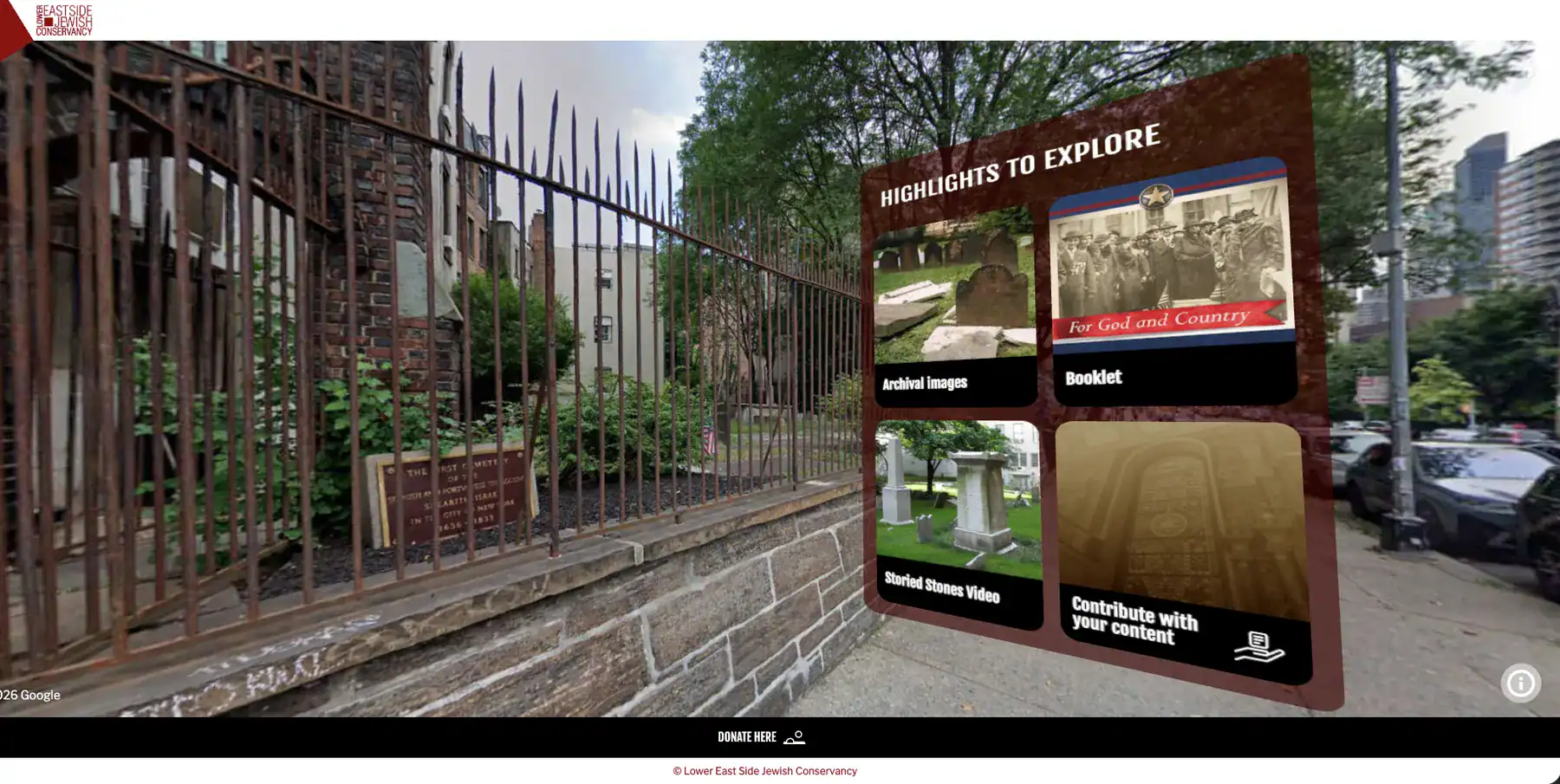
In this way, adaptability is not only a technical feature of the framework, but part of the cultural purpose of the project itself: preserving the past while leaving space for future contributions, discoveries, and connections.
Extending the same principle to fundraising.
For nonprofits, donations are fundamental to sustaining preservation work, programming, and community engagement. For the Lower East Side Jewish Conservancy, we built a donation pathway directly into the AR experience, allowing visitors to explore a site, and consider a donation at the moment they are most engaged.
We also created a donor recognition tool using a virtual donation wall, so supporters can be acknowledged within the experience.
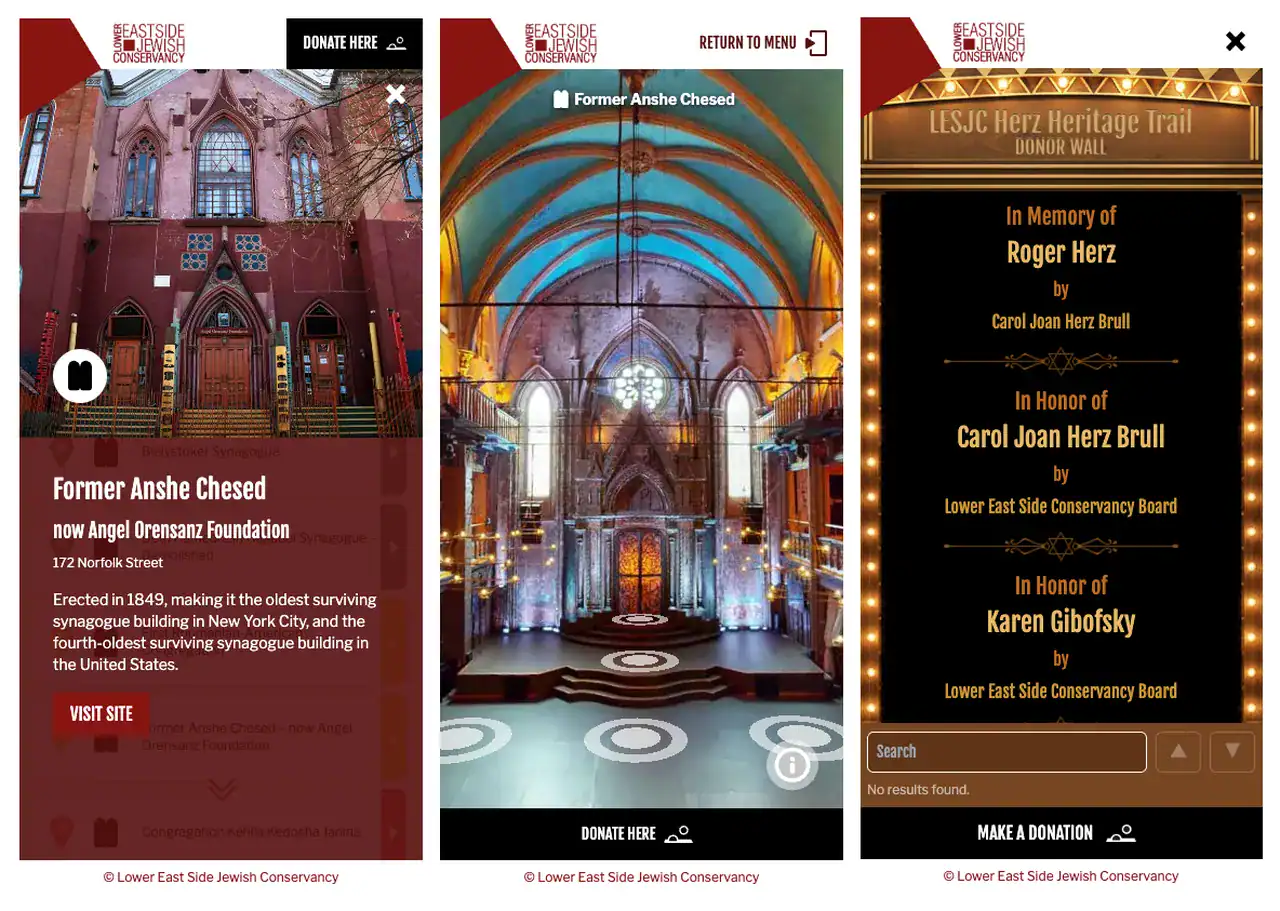
Just as important is how donor information is managed. For nonprofit teams, updating donor names should not require a developer or technical specialist. Instead, the system was designed around familiar tools like Google Sheets on Google Drive, allowing partner teams to manage donor lists themselves in a simple, accessible way. Updates made on the Google Sheets are updated in real-time in the experience.
Beyond the Build: From One Heritage Trail to Future Stories Yet to Be Told
Beyond the immediate build, the project also pointed toward something more reusable. The framework was discussed as something that could extend beyond this single brief into other heritage, museum, education, or nonprofit experiences. In that sense, the work was not only about delivering a project, but about creating a set of principles and a technical approach that could be applied again in future contexts.
At its core, this project was about designing under uncertainty. The team had to make smart decisions without having the full picture from day one, and create a system that could support growth in sites, content, and storytelling formats over time. What emerged was a flexible heritage experience built not around fixed inputs, but around adaptability itself.
Have you got a heritage project we can help you bring to life?
Whether you’re a cultural institution, heritage organisation, or brand with a story worth telling, Blippar’s WebAR platform makes it possible to create immersive, location-based experiences — no app download required.